Natural Wood Decks Shaped for Life Outdoors in Austin
A wood deck in Austin is a natural-wood outdoor floor built from cedar, pressure-treated pine, ipe, or tigerwood, shaped and sealed for Central Texas heat and storms by a fully insured crew that sizes the frame and footings to your lot. Real wood brings warmth and grain that composite can’t quite copy, and it rewards a little upkeep with decades of use.
Wood decking is for homeowners who want that natural look and don’t mind a seal coat every so often to keep it. We’ll help you weigh species, color, and upkeep against how you’ll actually live on the deck. If you’d like real numbers for your yard, you can request a quote, and we’ll set a same-week visit.
Request Free Estimate
Wood Species We Build
Each species behaves differently once it’s outdoors in Texas, so the right pick depends on your budget, your look, and how much upkeep you’re willing to take on. Cedar stays cooler underfoot, resists rot on its own, and carries that clean scent, though it silvers to gray if you don’t reseal it. We build a lot of cedar board builds for homeowners who want a soft, classic board that’s easy on bare feet.
Pressure-treated pine is the budget-friendly workhorse. It’s strong and holds fasteners well, but it moves as it dries, so we let the boards acclimate and gap them right to keep the surface flat. For the long game, ipe and tigerwood are dense tropical hardwoods that shrug off rot, insects, and foot traffic for decades. Ipe is so hard that we pre-drill every fastener and hide clips where we can, and it’s earned its reputation on the lake-country builds we’ve done. If you’re torn between the exotics, our ipe hardwood comparison lays out how the two grains and price points differ.

Building and Sealing for the Texas Climate
Wood lives or dies by how it’s sealed here. Our sun is brutal on unfinished boards, and a deck that goes a season without a coat will check and gray fast. We finish new builds and set you up with a reseal rhythm, and when a tired deck needs bringing back, our wood stain service strips, sands, and recoats it rather than replacing good lumber.
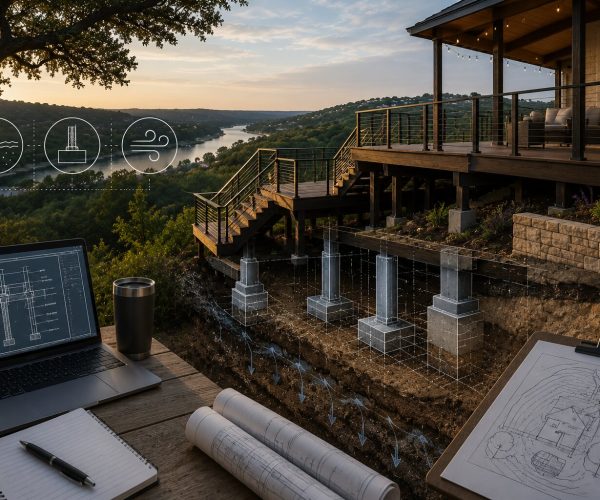
What holds it all up matters just as much as the boards. We’ve learned that Austin’s clay and caliche move with the seasons, so we drill and pour a deck substructure to the depth each lot calls for, then frame dead level from there. A wood deck can’t stay tight and quiet on a frame that shifts, so we don’t cut that corner.
Why Austin Homeowners Hire Us
We back every build with a one-year workmanship warranty, and we’re fully insured before we set a single post. We clean the site the same day we finish, so offcuts and fasteners don’t end up in your grass. If you want to see how a job runs from first walk to final board, our step-by-step process lays it out.
Permitting catches many wood-deck projects off guard. Most attached decks, and anything more than thirty inches above grade, need a city review first, and the code cares about decay-resistant species and proper hardware. Our trusted permit partners handle the City of Austin residential building permit and inspections, and for county-specific questions, our permitting guidance page walks you through them.
Where We Build
We build wood decks across a 15-mile radius around downtown Austin, and terrain shapes every job. Out on the hill-country lots, we’ve framed multi-level ipe builds in Falconhead builds and nearby Spanish Oaks, where the grade drops close to twenty feet, and the footings go into solid limestone. Those yards taught us how hardwood and rock work together when a deck steps down a slope.
Down toward the water, Lakeway deck builds tend to be lakeside homes that want ipe or tigerwood for the view and the durability, and the lake wind chews through a cheap finish, so we spec the seal accordingly. Wherever you sit, we’ll match the species, the frame, and the finish to the site and the way you’ll use it.
Wood Deck FAQs
What is the best wood for a deck in Austin?
It depends on your budget and tolerance for upkeep. Cedar gives you natural rot resistance and a cooler surface at a mid-range cost. Ipe and tigerwood last for decades and handle heat and traffic, but they cost more and require more maintenance. Pressure-treated pine is the budget pick if you’ll keep it sealed. We’ll walk you through the trade-offs on-site.
How often does a wood deck need to be sealed in Texas?
Plan to reseal every 1 to 3 years, depending on species, color, and sun exposure. Cedar and pine drink up sealer faster than the dense hardwoods, and a west-facing deck bakes harder than a shaded one. We finish every new build and hand you a simple schedule so the boards keep their color and don’t need to be checked.
Are wood decks worth it compared to composite?
For many Austin homeowners, yes. Wood costs less up front and gives you grain and warmth that a composite can’t match. The trade is upkeep: you’ll sand and reseal on a cycle. If low maintenance matters more than natural wood, weigh our low-maintenance decking options before you commit.
How long does an ipe or hardwood deck last?
A well-built, well-sealed ipe deck can serve decades, often outliving the house’s other outdoor features. The tropical hardwoods resist rot, insects, and wear naturally, without chemical treatment. The catch is the frame underneath, which has to be sized and flashed to match that lifespan, or the boards outlast their own substructure.
Do you build wood decks in Austin with railings?
Yes. Most raised decks need a code-height guard, and wood pairs with plenty of styles. We build matching wood rails, and we mix in metal or cable where you want the view kept open. Take a look at our wood railing options to see what fits your build and your sightlines.
Does a wood deck need a permit in Austin?
Usually, yes. The City of Austin requires a residential building permit for most attached decks and for freestanding decks more than thirty inches above grade, and the code sets rules for decay-resistant lumber and hardware. Our trusted permit partners prepare the drawings and carry them through review and inspection so you’re not stuck decoding city forms.
Can you match a new wood deck to my existing one?
Often, yes. We’ll assess the species, board width, and how much the old wood has weathered, then blend the new run so it reads as one deck rather than a patch. Perfect color matches on aged wood are tough, but a coat of stain over the whole surface usually pulls old and new together.
Will a wood deck warp or crack in the Texas heat?
Any wood expands with heat and humidity, but good building practices keep it in check. We acclimate boards before installation, gap them for expansion, fasten them to the manufacturer’s spec, and seal against moisture swings. Species matters too: dense ipe barely budges, while pine needs more care. Done right, a wood deck stays flat and tight for years. Call us at (512) 215-3767 for a free estimate, and we’ll spec the right species for your lot.