Cable, Glass, and Wood Railing Engineering for Austin Decks
Cable rail, glass panel railings, aluminum systems, and wood post railings all meet the 42-inch code requirement for decks above 30 inches when properly engineered. Top Notch Deck Builder installs every guardrail with structural load testing in accordance with the International Residential Code throughout Austin and the Hill Country.
Request Free Estimate
Deck railings are structural. They’re not decorative trim added at the end of a build. The guardrail must support a 200-pound concentrated load at any point along the top rail (IRC R301.5), and the infill must resist a 50-pound load over a 1-square-foot area. Failure to meet these standards is the leading cause of deck-related injury claims. It’s not optional engineering.
For new builds, we engineer the railing system into the structural plan from Phase 1. For retrofit or upgrade railings, we structurally evaluate the existing post connections before specifying any system.
If you’re planning a railing project, call (512) 215-3767 or request a free assessment to get started.
Code Requirements for Austin Deck Railings
The structural code for deck railings is set by the International Residential Code (IRC), adopted with local amendments by the City of Austin, Travis County, and surrounding jurisdictions.
42-inch guardrail height. Required for any deck more than 30 inches above grade. Measured from the deck surface to the top of the guardrail. Decks 30 inches and lower don’t require a guardrail by code, but most homeowners install one for safety.
4-inch sphere rule. The infill cannot allow a 4-inch sphere to pass through anywhere. For cable rail, that means cable spacing maxes out at 3 inches.
Graspable handrail. Required on stair runs with 4 or more risers. The top must be 34 to 38 inches above the stair nosing. Profile must be graspable (1.25 to 2 inches for round).
Load testing. Guardrails must support 200 pounds at any point. Infill has to support 50 pounds per square foot. We’ll follow the manufacturer’s structural specifications for each system.
Permit requirements. The structural permit covers deck railings on a new build. Retrofit railings on existing decks may need a separate permit depending on the jurisdiction. For HOA properties, see our HOA submission workflow since railing material is often subject to architectural review.
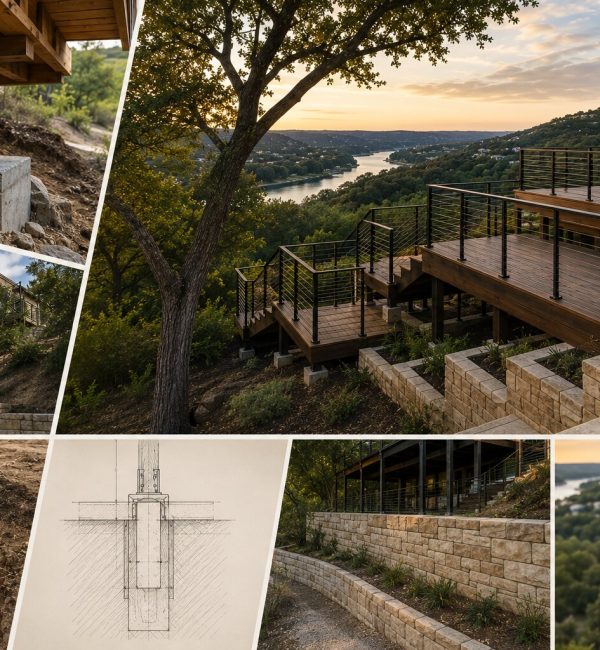
Cable Rail Systems
Cable rail’s the most-requested system for Hill Country deck builds, especially on view lots. It’s the cleanest visual we install.
Feeney CableRail. The industry standard. 1/8-inch stainless steel cable with swageless fittings. Cable spacing at 3 inches max. We use Feeney for most installs because of the structural certification and warranty.
AGS Stainless Clearview. Premium alternative with low-profile post collars and welded brackets. Higher cost but cleaner at post connections.
Atlantis Rail. Lower-cost option for builds where budget matters more than the premium finish. Same structural performance, simpler post-mount hardware.
Cable tension. Cable rail systems require periodic re-tensioning, especially in the first 6 months after installation. We’ll show you how to re-tension during the final walkthrough or schedule annual maintenance visits.
Post material. Cable rail typically anchors to wood posts (cedar or pressure-treated), aluminum posts, or steel posts. Each has different structural load characteristics that affect cable spacing and termination hardware.
Glass Panel Railings
Glass railings preserve the entire deck view. They’re the premium option for view-lot installations.
Tempered glass requirement. All deck glass railings must use tempered safety glass. Standard plate glass is not code-compliant. We spec 3/8-inch tempered glass for most residential installations, 1/2-inch for higher exposure or extended panel spans.
Frameless vs framed. Frameless glass (channel-mounted at the deck edge) offers the cleanest look, but it’s structurally demanding at the channel attachment point. Framed glass (with metal stiles) is structurally simpler and lower cost.
Wind load engineering. For elevated decks with significant wind exposure, glass railings require wind-load engineering to confirm that the panel sizes and attachment hardware can withstand the loads. For elevated deck builds and other vertical-drop projects, this matters more than on-grade-level decks.
Wood Post Railings
Traditional wood post systems remain the most common Hill Country deck railing, especially on cedar decks and HOA-restricted properties where cable or glass aren’t permitted.
Cedar posts with a cedar top rail. The traditional wood deck railing. Ages naturally to a silver-gray patina. Requires re-staining every 18 to 30 months along with the deck surface. See deck staining for the schedule.
Pressure-treated posts with composite caps. Cost-effective for builds where the visible surface gets a stain or paint finish. The pressure-treated posts handle the structural load; composite caps protect the end grain from water absorption.
Ipe and hardwood posts. Premium option for high-end builds. Higher upfront cost, but it’s a 40+ year lifespan without rot.
Baluster spacing. Wood balusters are typically spaced at 4-inch centers to meet the 4-inch sphere rule. For elevated and hillside builds, we’ll coordinate post placement with the foundation engineering plan. We’ll pre-cut and pre-drill posts in the shop to ensure consistent spacing and a clean installation.
Aluminum and Metal Systems
Aluminum and steel railing systems are growing for composite deck builds and HOA-restricted properties.
Powder-coated aluminum. Low-maintenance, no-staining required, color options that match most home exteriors. Common for HOA-approved installations.
Wrought iron/steel. Heavier visual weight than aluminum, but adds custom-design flexibility for ornate patterns. Higher maintenance (rust prevention on cut edges).
Composite-clad aluminum. Aluminum structural posts wrapped in composite material to match the deck surface. It’s structural strength combined with visual continuity.
Integration with Custom Deck Features
For projects that combine railings with other custom elements, see our custom deck features page. Common combinations include integrated bench seating along the railing line, planter boxes mounted to the rail structure, post-cap lighting, and built-in drink rails or bar tops.
Our build process for new builds includes railing system selection as part of Phase 2 design. For retrofit railing projects, we run a focused 3-phase process: structural evaluation, system selection, and installation.
Frequently Asked Questions About Deck Railings
What's the code requirement for deck railing height in Austin?
42 inches measured from the deck surface to the top of the guardrail, required for any deck more than 30 inches above grade. The infill must not allow a 4-inch sphere to pass through anywhere. Stair handrails must be 34 to 38 inches above the stair nosing. We don’t compromise on these dimensions even when homeowners request lower for view reasons.
Are cable rail systems code-compliant?
Yes, when properly installed. Cable rail must be tensioned to the manufacturer’s specification, cable spacing must not exceed 3 inches, and the structural connection at posts must be load-rated. We use Feeney, AGS, or Atlantis systems with documented load testing. Some jurisdictions require specific deflection tests for cable rail; we’ll handle that with the permit submission.
Do glass deck railings need to be tempered?
Yes, always. Standard plate glass shatters into large shards on impact and is not code-compliant for deck guardrails. We spec 3/8-inch tempered glass for most residential installations and 1/2-inch for spans over 4 feet or high-wind-exposure decks. Laminated tempered glass adds an extra layer of safety but is rarely required by residential code.
Can you retrofit cable rail onto an existing deck?
Sometimes. We’ll first structurally evaluate the existing posts. Posts must be sized and anchored correctly to handle cable-tension loads (much higher than those in wood baluster systems). Older decks with undersized posts or weak post-to-frame connections need post replacement before cable rail installation. We don’t install cable rail on posts that won’t pass our structural check.
How do you handle railing posts on a hillside or elevated deck?
Posts on elevated and hillside decks need stronger structural anchoring than grade-level decks because wind loads and live loads are higher. For hillside deck builds, we typically use 6×6 cedar or steel posts with through-bolted connections to the deck frame, plus diagonal bracing on long runs. The cable rail and glass on these decks require additional structural review.
What's the difference between Feeney, AGS, and Atlantis cable systems?
Feeney CableRail is the industry standard with the widest hardware availability and a 25-year warranty. AGS Stainless Clearview has a cleaner post-collar profile and welded brackets, but a higher cost. Atlantis Rail is the most budget-friendly, with similar structural performance but more visible mounting hardware. We’ll spec the system based on the project’s visual priority and budget.
Do deck railings require a permit?
For new deck builds, the railings are covered under the structural permit. For retrofit or replacement railings on an existing deck, permit requirements vary by jurisdiction. Most Austin-metro jurisdictions require a permit if the work involves replacing more than a few balusters or changing post locations. Our permit partners handle the application.
Schedule a Railing Assessment
Every railing project starts with assessing the deck’s structural condition, the homeowner’s view priorities, code requirements for the specific deck height, and any HOA architectural standards. We’ll recommend the right system, post material, and installation approach. Call (512) 215-3767 or fill out the form to schedule your free assessment. Fully insured. 4.9 average rating.