Custom Deck Construction in Bee Cave, Texas
Top Notch Deck Builder designs and builds custom wood, composite, and hardwood decks for homeowners in Bee Cave, TX. We’re fully insured, work with trusted permit partners, and offer free estimates for properties in Falconhead, Lake Pointe, Spanish Oaks, and surrounding neighborhoods along the 71 corridor.
Request Free Estimate
Bee Cave sits about 12 miles west of downtown Austin, right where the flat blackland prairie gives way to Hill Country limestone. It’s one of the more desirable communities on the west side, and the homes here reflect that. Backyards tend to have real terrain, whether that’s a gentle roll down toward a tree line or a genuine 15-foot grade drop behind the house. Building a deck on these lots takes more than a standard plan. It takes someone who’s walked the ground, tested the soil, and knows what’s under the surface before the first footing goes in.
Deck Building in Bee Cave's Neighborhoods
Falconhead is one of the most active neighborhoods for deck projects in Bee Cave. The community sits along the Falconhead Golf Club, and backyards range from relatively flat lots near the community center to moderately sloped properties along the southern edges. Multi-level decks and pool surrounds are common builds here. Falconhead’s HOA requires architectural approval before construction, and we coordinate HOA-compliant designs and submissions as part of every project.
Spanish Oaks is Bee Cave’s luxury tier. The lots are large, the homes are architect-designed, and the outdoor spaces are expected to match. We’ve built a multi-level ipe hardwood deck in this community where the rear lot dropped nearly 20 feet from the home’s foundation to the property line. The footings had to be engineered independently at each tier to account for the slope angle and the variable rock depth we hit during excavation. That’s the kind of build Spanish Oaks demands.
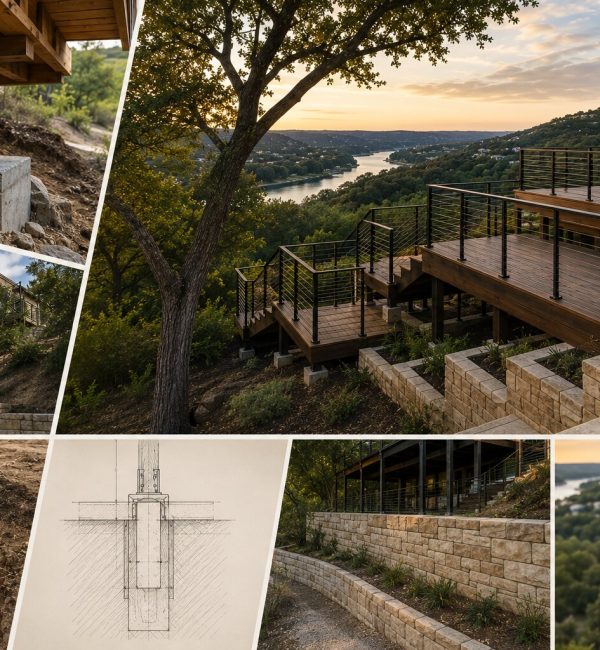
Lake Pointe benefits from its proximity to Lake Travis, and many homeowners here want decks that capture the canyon and water views while holding up to the sustained moisture and UV cycling that comes with the location. Low-maintenance composite and exotic hardwoods tend to be the right call for Lake Pointe properties, since untreated softwoods don’t handle the moisture exposure as well over time.
The neighborhoods along Hamilton Pool Road, around the Hill Country Galleria, and in Bee Cave proper cover a mix of newer developments and established homes from different eras of the city’s growth. Lot conditions range from flat commercial-area adjacent properties to genuine Hill Country terrain with rolling grades and mature live oak coverage. We build everything from compact ground-level platforms on newer lots to full multi-level structures on larger properties where the terrain makes the design more interesting and the engineering more involved.
Building on Bee Cave's Terrain
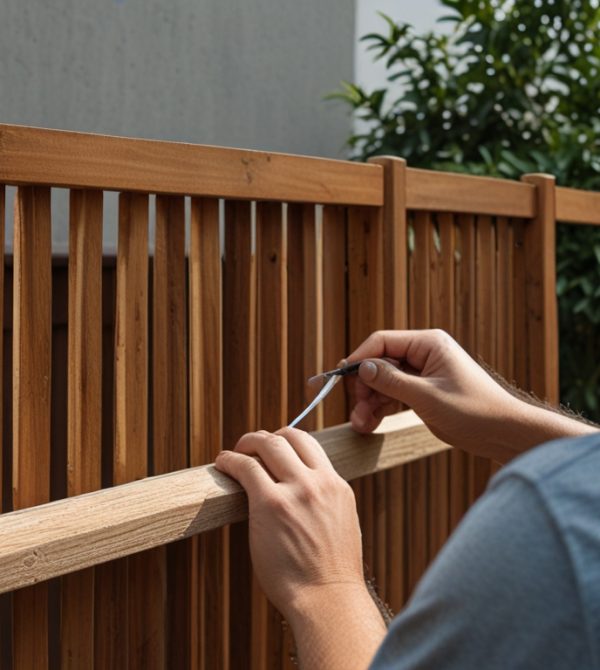
Most of the challenge in Bee Cave deck building is below the surface. The geology here transitions between clay soil and limestone substrates, and the conditions can change significantly from one lot to the next. We’ve seen properties where rock sits two feet below grade on one side of the yard and six feet on the other. Every raised platform build starts with a thorough site assessment so the site-specific footings account for what’s actually there, not what a standard plan assumes.
Grade changes are the norm, not the exception. Tiered deck layouts that step down the slope in zones, each with its own structural support, are one of the most common project types we do in Bee Cave. The result is a deck that follows the natural contour of the land instead of fighting it, and it gives you distinct areas for dining, lounging, and grilling without everything sitting on one flat plane.
On the steeper lots, especially in Spanish Oaks and along the edges of Falconhead, steep-grade deck construction requires additional engineering for lateral bracing, drainage routing, and soil retention. We’ve worked on sites where the drainage plan took as much planning as the deck itself, because water running under an elevated structure on a hillside can undermine footings if it’s not channeled correctly from the start.
Materials That Handle Bee Cave's Climate
Bee Cave gets full Hill Country sun exposure, which means UV degradation is a real factor in material selection. For homeowners who want real wood, we build with premium cedar and pressure-treated pine and recommend a maintenance schedule that accounts for the higher UV load on this side of Austin. We also install view-preserving railings including cable and glass systems that protect sightlines to the Hill Country and lake views that make Bee Cave properties special.
For lower maintenance, composite decking from Trex, TimberTech, and Fiberon holds up well here. The newer composite lines resist fading even under sustained UV, and they won’t warp, crack, or splinter the way untreated wood does after a few Texas summers. We help every Bee Cave homeowner weigh the upfront cost against the long-term maintenance savings and pick the material that fits how they actually want to use and care for their deck.
Bee Cave Permits and HOA Coordination
Bee Cave is an incorporated city with its own Planning and Development Services department, separate from Travis County. Most deck projects require a building permit through the city’s application process. We work with trusted permit partners who handle the submission, documentation, and inspection coordination so you don’t have to manage any of it. If your community has HOA architectural review, like Falconhead or Spanish Oaks, we prepare the design package and handle that submission too. A thorough full design consultation upfront means the permit and HOA submissions go through without revisions or delays.
Frequently Asked Questions
How much does it cost to build a deck in Bee Cave?
Deck costs in Bee Cave vary based on the size, materials, terrain, and design complexity. Sloped lots and properties with limestone substrates can require additional foundation work that affects the total. We provide free, detailed estimates so you know exactly what your project will cost before any work begins. Call (512) 215-3767 to schedule yours.
What materials work best for decks in Bee Cave?
Composite decking holds up well to Bee Cave’s UV exposure and requires almost no maintenance. Cedar is a solid natural option with good weather resistance. Ipe and other tropical hardwoods are the premium choice for homeowners who want maximum durability and a distinctive look. We’ll walk you through the tradeoffs during your free estimate.
Do I need a permit to build a deck in Bee Cave?
Yes. Bee Cave is an incorporated city with its own permitting process through its Planning and Development Services department. Most deck projects require a building permit, especially if the deck is attached to the home or elevated. We work with trusted permit partners who manage the full process.
Does Falconhead HOA allow deck construction?
Falconhead allows deck construction but requires architectural review and approval before building begins. The HOA has guidelines covering materials, colors, setbacks, and design compatibility with the community’s aesthetic. We’re familiar with their process and handle the submission as part of the project.
Can you build a deck on a sloped lot in Bee Cave?
Yes. Sloped lots are common in Bee Cave, especially in Spanish Oaks and the western edges of Falconhead. We engineer multi-level and elevated deck structures with independent footings at each tier, proper lateral bracing, and drainage routing designed for the specific slope and soil conditions on your property.
How long does a deck build take in Bee Cave?
Most residential deck builds in Bee Cave take one to three weeks once construction starts. Larger or more complex projects, especially multi-level builds on steep lots, may take longer. The permitting process through the City of Bee Cave typically adds one to three weeks before we can break ground.
What areas near Bee Cave do you serve?
We serve Bee Cave and the surrounding communities including West Lake Hills, Lakeway, the Lake Travis corridor, Austin, Rollingwood, and the Hill Country Galleria area. If you’re within about 15 miles of downtown Austin, we’d be happy to come out for a free estimate.