Build a Composite Deck That Holds Up to the Austin Climate
A composite deck in Austin is a low-maintenance outdoor floor built from capped boards that resist fading, staining, and moisture through hot Texas summers and sudden storms, installed by a fully insured crew over an engineered, code-built substructure sized for your lot. We install Trex, TimberTech, Fiberon, and AZEK, and we’ll tell you straight which board line fits the way you’ll actually use the space.
Request Free Estimate
Composite decking suits Austin homeowners who’re tired of sanding and re-coating every couple of seasons. The boards wear a hard polymer shell, so they don’t splinter and hold their color when the July sun beats down on them for hours. Want real numbers for your yard? You can schedule your estimate, and we’ll set a same-week on-site visit.
Composite Board Lines We Install
Not every board is the same, and the shell is where the difference lives. Capped composite wraps a wood-and-plastic core in a protective polymer layer on all four sides, which is what keeps stains and mildew from soaking in. We install Trex composite decking alongside TimberTech, Fiberon, and AZEK, so you’re choosing from the full range of textures and color runs instead of whatever one supplier happens to stock.
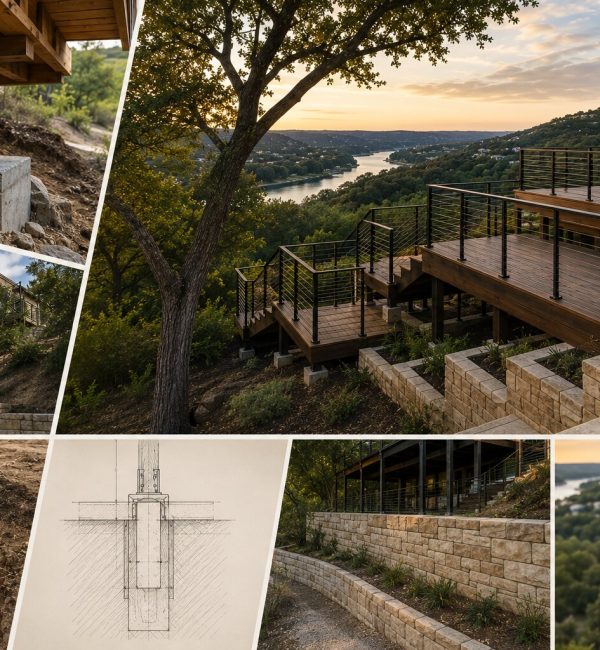
What we’ve learned on Austin jobs is that the substructure decides how long any deck lasts, composite included. Boards can’t rescue a weak frame, and they won’t hide one either. We size joists and set spacing for the span, then fasten with hidden clips so the walking surface stays clean, with no screw heads to catch bare feet. On builds that need extra ground clearance or to ride over a slope, we tie the deck into properly sized structural footings rather than floating it on the dirt.
Austin heat moves material, so we build for it. Composite boards expand and contract with temperature, and we set the end gaps and fastener spacing to the manufacturer’s numbers for our climate, not a generic chart. We keep airflow moving under the frame, too, because a deck that can’t breathe traps moisture against the joists. Small choices like these are what keep a board flat and quiet for years to come.
Composite also pairs with add-ons that wood struggles to match. Around water, it stays cooler underfoot and shrugs off splash-out, which is why we reach for it so often on poolside surfaces. At the edges, cable rail systems keep sightlines open without the yearly upkeep that painted wood rails require.
Why Austin Homeowners Hire Us
We back every build with a one-year workmanship warranty, and we’re fully insured before we set a single post. That’s not a sales line; it’s what protects your home if something goes sideways during the framing. We don’t shortcut the substructure to hit a number, and we won’t quote a board grade we can’t actually source for you. When we’re done, your yard gets cleaned up the same day, with offcuts and fasteners hauled off instead of left in the grass for you to find later.
Permitting trips up a lot of deck projects here. Most attached decks and anything more than 30 inches above grade need a city review first. We work with trusted permit partners who carry the drawings through the Austin residential building permit application and the inspections that follow, so you’re not chasing city paperwork alone. If you’d like to see how a job runs start to finish, our build process walks through each stage.
Where We Build
We build composite decks within a 15-mile radius of downtown Austin, from Central and South Austin out to the hill country suburbs. Terrain matters more than most homeowners expect, and it’ll shape the whole build. Out on Bee Cave decks we’ve framed multi-level ipe and composite builds on Spanish Oaks lots where the grade drops close to twenty feet, so we know how those caliche-and-limestone yards fight back when you drill for footings.
Closer to the lake, West Lake Hills builds sit on rocky ground where we’ve had to bench footings into solid limestone, and the architectural review boards there want composite colors submitted before we ever frame. North of the river, Pflugerville decks run flatter over clay that swells and shrinks with the seasons, so our footing depth shifts with the address. Wherever you sit, we’ll match the board line and the frame to the site.
Composite Deck FAQs
How much does a composite deck cost in Austin?
Composite pricing depends on square footage, board line, height off grade, railings, and how much substructure your lot needs. A flat backyard build runs far lower than a raised deck on a slope with footings drilled into rock. We don’t post flat rates because they’d be wrong for most yards. Once we walk the site, you’ll get an itemized estimate with no guesswork.
Is composite decking worth it over wood in Texas?
For most Austin homeowners, yes. Composite skips the yearly sanding, staining, and sealing that cedar and pine need in this climate, and the capped boards keep their color under harsh sun. Wood still wins on upfront cost and natural grain, so we build both. If you’d rather compare warmth and feel, look at our hardwood builds before you decide.
Does composite decking get too hot to walk on?
It can warm up in direct sun, like any decking, but lighter board colors and good airflow under the frame keep it reasonable. Around pools, we steer clients toward paler tones and shaded layouts. We’ll factor your sun exposure into the design so the surface stays comfortable through a long Austin afternoon.
Do I need a permit for a composite deck in Austin?
Usually, yes. The City of Austin requires a residential building permit for most attached decks and for freestanding decks more than thirty inches above grade. Our trusted permit partners prepare the drawings and carry them through the review and inspection process. If you want the layout dialed in first, start with deck layout planning so the permit set reflects the real design.
How long does a composite deck last?
A properly built composite deck can serve for decades with little more than an occasional wash. The boards resist rot, insects, and fading, and the hidden-fastener system avoids the popped screws that plague aging wood decks. The frame underneath matters just as much, which is why we size and flash the substructure to outlast the surface it carries.
Can you build a composite deck on a sloped or rocky lot?
Yes, and we do it often across Austin’s hill country. Slope and rock change how we set footings and how high the deck stands, not whether we can build it. We drill and pour to the depth the soil calls for, then frame dead level from there. Call us at (512) 215-3767 to set up your on-site estimate, and we’ll tell you exactly what your lot needs.
Where do you install composite decks in Austin?
We install composite decks in Austin and across the surrounding 15-mile service radius, including Bee Cave, West Lake Hills, Pflugerville, Buda, and Manor. Our crew works both the flat clay lots north of the river and the rocky hill-country grades to the west. Tell us your address, and we’ll confirm we cover it on the first call.
How long does a composite deck take to build?
A straightforward backyard composite deck usually takes about one to two weeks of on-site work once the permit clears and the materials arrive. Slope, footing depth, railings, and weather all move that window. We’ll give you a realistic schedule with your estimate, and we won’t start demo until the boards and hardware are staged and ready.