Built-Ins, Pergolas, and Outdoor Kitchens for Austin Decks
Pergolas, outdoor kitchens, built-in seating, lighting, cable rail, and fire features are integrated into Austin deck builds when designed in Phase 1. Top Notch Deck Builder engineers every feature into the structural plan, not bolted on as an afterthought.
Request Free Estimate
A custom deck isn’t just a bigger deck. It’s a deck with the right features for how you’ll actually use the space, designed and engineered into the structure before the first board goes down. Built-in seating with the right post sizing underneath. Pergolas with proper footing plans. Outdoor kitchens with structural reinforcement and utility routing through the framing.
Most custom deck work fails because features are added to a deck designed for a flat surface. The pergola posts don’t tie back to the deck framing. The outdoor kitchen sits on a section that wasn’t reinforced. The under-deck lighting wires run through the joists with no provision for service access.
We’ve built decks across Central Texas, and the custom features on our builds are engineered into the structural plan from Phase 1. Every feature gets the load calculation, the connection hardware, and the utility routing it actually needs. Call (512) 215-3767 or request a free at-home consultation to plan your custom build.
Why Custom Features Need Engineering Up Front
Three problems happen when custom features get treated as afterthoughts.
The first is load. An outdoor kitchen with a built-in grill, refrigerator, and countertop can add 500 pounds to one section of the deck. A heavy pergola with full timber posts can add another 800 pounds at four-point loads. Standard deck framing isn’t designed for those concentrated loads, so the deck either needs reinforcement or the feature needs to be scaled down. We’ll catch this during the Phase 1 structural plan, not during construction.
The second is utility routing. Outdoor kitchens need gas, water, and electricity. Lighting needs power runs. Audio systems need wire pathways and weatherproof junctions. All of that has to route through the framing without compromising structural members or making future service impossible. We’ll plan utility paths into the structural plan, including access points for maintenance.
The third is integration. Pergolas, built-in benches, planters, and railings all attach to the deck framing. The connections have to be designed for the load and the long-term durability. Lag bolts into a joist face don’t hold a 12-foot pergola through the Texas storm season. We’ll use proper post bases, blocking, and lateral bracing for every feature.
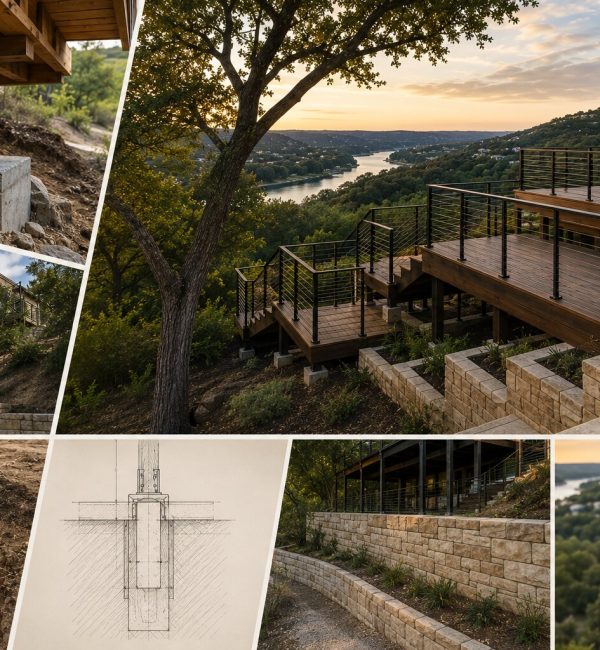
Custom Features We Build
From simple lighting upgrades to fully integrated outdoor living spaces, we build the full range of custom deck features. Here’s what we do most.
Pergolas and Shade Structures
Cedar, aluminum, or composite pergola structures integrated with the deck framing. Open-roof or louvered roof systems for adjustable coverage. Post bases tie back to deck footings with lateral bracing for wind load.
Built-In Seating and Storage
Bench seating with integrated storage underneath, often wrapping the deck perimeter to define use zones. Engineered as part of the framing, so the bench takes structural load and lasts as long as the deck.
Outdoor Kitchens
Built-in grill stations, refrigerator integration, prep counter space, and full outdoor cooking suites. Requires reinforced framing, dedicated footings, and gas/water/electrical runs through the structure. Often paired with elevated deck construction for view-side kitchens.
Lighting Systems
Integrated post-cap lighting, stair tread lights, under-rail accent lighting, and full deck-area illumination. Wiring routes through framing with junction boxes accessible from below.
Cable Rail and Glass Rail
Code-compliant guardrail systems that preserve sightlines on view lots. Cable systems tension between posts; glass panel systems clip into stainless hardware. Common on hillside deck view-lot builds.
Fire Features
Built-in gas fire pits, decorative fire bowls, and integrated fireplaces. Requires gas routing through framing, clearance of fire-rated materials, and structural reinforcement for masonry surrounds.
Pattern Decking and Inlays
Diagonal board layouts, herringbone patterns, contrast wood inlays, and custom border details. Adds visual complexity without changing the structural plan, though complex patterns increase material waste.
Spiral and Feature Stairs
Steel spiral stairs from the upper deck to the lower yard, or feature stair runs with deeper treads and integrated planters. Common on multi-level deck designs.
How We Engineer Custom Features Into the Build
Custom features get planned during Phase 2 of our build process. We’ll feed structural implications back to Phase 1 if needed.
Each custom feature gets a load calculation: the feature’s weight plus live load from use, distributed across the support points. Pergolas, outdoor kitchens, fire features, and stone hardscape are the biggest contributors.
Gas, water, electrical, and low-voltage runs route through the framing, with junction boxes and access points specified prior to construction. We’ll size joists and beams to handle the routing without compromising structural members.
Heavy features sometimes need dedicated footings that go deeper or use a larger diameter than standard deck footings. The foundation engineering plan accounts for these in the original site assessment.
Custom features often use different materials than the deck surface: stone for outdoor kitchens, metal for pergolas, and glass for rails. We’ll coordinate material orders so everything arrives on schedule and the connections work at every interface.
Custom features in HOA communities often require additional architectural review beyond the basic deck approval, especially for pergolas above height limits or outdoor kitchens with visible utility hookups. We’ll include these in the architectural submission package.
Where We Build Custom Decks
Custom features appear across our service area, with a concentration in three patterns.
Hill Country and view lots: West Lake Hills, Lakeway, Lake Travis, Rough Hollow, The Hills of Lakeway, Steiner Ranch, Westlake. View-preservation drives cable rail demand; outdoor kitchens are common because the views are worth dining out for.
Hill Country rural: Dripping Springs, Spicewood, Bee Cave. Larger lots support bigger custom builds with pergolas and integrated entertainment areas.
Austin metro inner neighborhoods: Tarrytown, Mueller, Circle C, Travis Heights, and Northwest Hills. Custom features are about getting more usable outdoor space out of smaller lots.
Material choice for custom decks typically pairs with composite deck builds for low maintenance or with wood deck construction for traditional aesthetics.
Screened-In Deck Enclosures
A screened-in deck gives you the best of both worlds: open-air living without the mosquitoes, pollen, and debris that cut outdoor time short in Central Texas. We build screen enclosures directly onto new and existing deck frames, using retractable and fixed screen systems that let you control airflow while keeping bugs out from early spring through late fall.
Most screened-in builds in Austin start with a sturdy roof structure, whether that’s a full covered deck frame or a pergola-style overhead with screen panels attached to the posts and beams. We work with aluminum and fiberglass mesh options depending on your visibility preferences, pet considerations, and budget. The framing ties into your deck’s existing structure so the enclosure feels like part of the build, not an afterthought.
Screened-in decks are especially popular in neighborhoods near creeks, greenbelts, and wooded lots where insects are a bigger factor. If you’re considering one, mention it during your free estimate so we can plan the framing and roofline from the start.

Frequently Asked Questions About Custom Deck Design
What does "custom" mean on a deck build?
Any feature beyond the standard decking surface and railings. Pergolas, outdoor kitchens, built-in seating, lighting, cable rail, fire features, pattern decking, and feature stairs all count. Customization can be a single added feature or a fully integrated outdoor living plan.
How much do custom features add to deck cost?
Depends on the feature. Lighting and basic railing upgrades are modest add-ons. Pergolas, outdoor kitchens, and fire features can double or triple the project budget depending on materials and complexity. We’ll line-item every custom feature in the written proposal so you can see exactly what each one adds.
Can I add custom features to an existing deck?
Sometimes, depending on the deck’s structural condition. The deck must support the added load, and the existing framing must allow utility routing if the feature requires it. We inspect the deck during site assessment and tell you which features are feasible and which would require rebuilding the structure first.
Do you build outdoor kitchens?
Yes. We build everything from a simple grill cabinet to a fully integrated kitchen with refrigerator, prep counter, and beverage station. The structural plan reinforces the kitchen zone, and we route gas, water, and electrical through the framing during construction.
What pergola materials do you work with?
Cedar for traditional aesthetics, aluminum for low maintenance, and composite for hybrid durability. Louvered roof systems with motorized adjustable louvers are available in aluminum if shade adjustability matters. We’ll engineer the pergola post bases to the deck framing or to dedicated footings, depending on size and load.
Can you do under-deck living spaces?
Yes, on elevated decks above 8 feet. The space below the deck becomes a covered patio, storage area, or even a finished outdoor room. Requires drainage management above, ceiling system installation, and lighting. Most common on hillside builds where the lower grade level is usable.
How long do custom features add to the build timeline?
Depends on the feature complexity. Lighting adds one to three days. Pergolas add three to seven days. Outdoor kitchens add one to two weeks because of utility hookups and final inspection scheduling. Pattern decking adds 20 to 40 percent to the framing time. We’ll include the feature timeline in the written proposal.
Can you add a screen enclosure to an existing deck?
Yes. If the existing deck frame and footings are structurally sound, we can add a screened-in enclosure without rebuilding the deck itself. We’ll assess the framing during your free estimate to confirm it can support the overhead structure and screen panels. In some cases, reinforcing a few posts or adding a beam is all that’s needed.
Schedule a Custom Deck Consultation
Custom builds start with how you want to use the space. We’ll come walk your lot, talk through the features you want, and tell you what’s structurally feasible. Call (512) 215-3767 or fill out the form to schedule your free at-home consultation. Fully insured.