Most homeowners spend weeks picking out decking materials and almost no time gathering the paperwork and decisions that actually control whether a project starts on schedule. A contractor can have a crew ready and lumber ordered, then sit idle for two weeks because a permit application is missing a site survey, or because the homeowner hasn’t decided whether they want composite decking or pressure-treated wood. These hold-ups are not rare edge cases. They are the single most common reason deck projects run late, and nearly all of them are preventable.
The Documents That Stop Work Before It Starts
Austin requires a building permit for any deck attached to a home, and the City of Austin’s Development Services Department needs specific documents before it will issue one. At minimum, expect to provide a site plan showing your property lines, the footprint of your house, and where the proposed deck sits relative to both. If you bought your home recently, your closing documents likely include a survey. Find it before you call a contractor. If you can’t locate it, a new survey typically costs $400 to $700 and adds one to two weeks to the timeline before work can even be permitted.
HOA approval is a separate layer entirely. Many properties near Travis Heights, Austin, TX fall under deed restrictions or homeowner association rules that govern deck materials, railing heights, and color. Top Notch Deck Builder sees this regularly: a homeowner assumes approval is automatic, submits nothing, and then faces a stop-work order after framing has already started. Check your HOA documents before signing a contract. If you’re unsure what applies to your property, read through the guidance on building decks in HOA communities before your first contractor conversation.
Decisions That Have to Happen Before Pricing Makes Sense
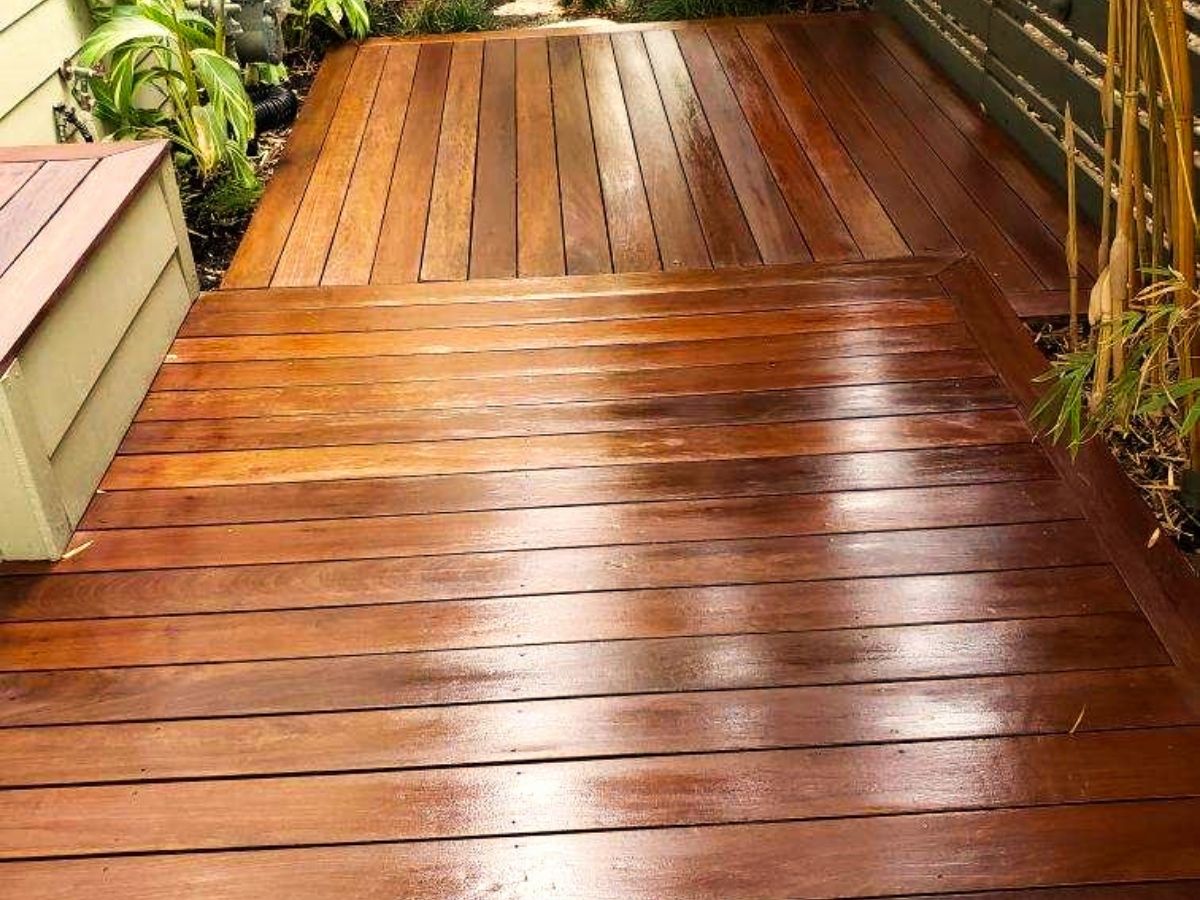
A contractor cannot give you a meaningful number without knowing what you actually want. Vague requests produce vague estimates, and vague estimates almost always end in change orders. Before your first meeting, work through these specifics.
Material choice matters more than most customers realize, both for cost and for long-term maintenance. Pressure-treated pine runs roughly $25 to $40 per square foot installed for a straightforward deck. Composite materials from brands like Trex or Azek typically land between $45 and $70 per square foot installed, depending on the product line. Neither is universally better. Composite holds up well against Austin’s heat and humidity cycles without annual staining. Wood costs less upfront but needs consistent maintenance, and deck staining every two to three years is a real budget line, not an optional extra.
Railing style is the other decision that surprises homeowners with its cost impact. Cable railing systems can add $150 to $250 per linear foot compared to basic wood balusters. Glass panels cost even more. Know your preference before asking for a quote, or be prepared to receive a range so wide it tells you almost nothing.
What the Site Itself Can Complicate
Contractors need to assess the site before committing to a price, and homeowners can speed that process by knowing a few things in advance. Slope is the biggest variable. Lots in and around Travis Heights, Austin, TX frequently have meaningful grade changes, and a deck on a sloped lot requires more engineering, more concrete, and more labor than a flat-yard build. Top Notch Deck Builder notes that customers often underestimate how much a 10-foot elevation change at the back of a lot affects foundation costs. If your yard drops away from the house, factor in that the foundation work alone can represent 20 to 30 percent of the total project cost.
Underground utilities are another site factor that homeowners rarely think about. Texas 811 (Dig Safe) must be called before any post holes are dug. This is legally required and takes two to three business days for utility marking. It costs nothing, but it has to happen. If a customer hasn’t initiated this call, the contractor cannot break ground, regardless of how ready everything else is.
Older homes, particularly those that have seen a deck replacement at some point, may also have buried footings from a previous structure. These can interfere with new post placement and occasionally require excavation work that wasn’t in the original scope. Knowing your deck’s history, even roughly, helps a contractor plan accurately.
The Conversation That Saves the Most Time
Budget transparency is the preparation most homeowners skip because it feels uncomfortable. Telling a contractor your actual number is not giving away negotiating power. It lets them design to your budget rather than present a plan you can’t afford and then spend three meetings scaling it back. A realistic deck project in Austin, TX runs from $12,000 on the low end for a simple ground-level structure to $50,000 or more for a large elevated build with premium materials and built-in features. Knowing where you sit in that range before the first call means the conversation starts in the right place.
Top Notch Deck Builder works with homeowners throughout Austin, TX to get projects permitted, designed, and built without the delays that come from missing information. If you’re ready to move forward or just want to understand what your project involves, reach out directly. Austin, TX, (512) 215-3767.
Frequently Asked Questions
What documents do I need to prepare before starting my deck project?
You need to provide a site plan showing your property lines, the footprint of your house, and where the proposed deck will be located. If you can’t find your survey from the closing documents, be prepared to spend $400 to $700 to get a new one, which can add one to two weeks to the timeline.
How can I avoid delays during the deck building process?
To avoid delays, ensure you have all necessary permits and HOA approvals in place before work begins. Additionally, make decisions about materials and railing styles beforehand, as vague requests can lead to change orders and extended timelines.
What factors affect the cost of my deck project?
Cost factors include the choice of materials and the site’s characteristics, such as slope and underground utilities. Pressure-treated pine typically costs $25 to $40 per square foot installed, while composite materials range from $45 to $70, and site complications can add 20 to 30 percent to foundation costs.
What common mistakes do homeowners make when planning a deck?
A common mistake is not being transparent about their budget, which can lead to proposals that are out of reach. Additionally, failing to call Texas 811 for utility marking before digging can halt progress, as this is a legal requirement that takes a few days to complete.
Get Directions to Top Notch Deck Builder
🎧 Listen to this as a podcast
Also on Apple Podcasts, Spotify, and Amazon Music.