Most homeowners get their first quote and immediately ask the wrong question: “Why is this so expensive?” The better question is where the money actually goes, because deck building costs are not arbitrary. They follow a clear logic once you understand what drives them, and knowing that logic helps you spend wisely, push back where it makes sense, and avoid the regrets that come from cutting the wrong corners.
Where the Real Money Goes Before a Single Board Gets Nailed Down
Labor is the largest line item on almost every deck project, and it is also the most misunderstood. Homeowners sometimes see a crew show up for a few days and assume the hourly rate is unreasonable. What they do not see is the hours spent pulling permits, coordinating inspections, sourcing materials at trade pricing, and doing the structural math that keeps a deck safe for decades. In Bouldin Creek, Austin, TX, many lots have grade changes, root-heavy soil, or setback restrictions that require extra planning before any digging starts. That pre-construction time is real work, and it belongs in the price.
Permits are another cost that surprises people. A deck over a certain height or square footage requires a city permit, and in Austin, TX that process has its own timeline and fees. Skipping the permit to save a few hundred dollars is one of the most common mistakes homeowners make. It creates liability, complicates home sales, and can result in a demolition order. Top Notch Deck Builder pulls permits on every applicable project, not as an upsell, but because it is the only responsible way to work.
Material Choices That Change the Total More Than Anything Else
The gap between a pressure-treated pine deck and a high-end composite deck can easily be $15,000 to $25,000 on a mid-size build. Neither choice is wrong, but the trade-offs are real. Pressure-treated wood costs less upfront and is easier to repair board by board down the road. It also requires regular maintenance, including deck stainingto hold up against Texas heat and humidity. Composite materials carry a higher initial cost but resist moisture, insects, and UV fading far better over time, which matters in a climate like Austin’s.
Hardware is a smaller line item that still adds up fast. Stainless steel fasteners, hidden clip systems, and galvanized joist hangers cost more than standard alternatives. They also last longer and hold better. Top Notch Deck Builder observes that one of the most consistent patterns in fixing older decks is that the framing is still solid, but the hardware has corroded and failed. Spending more on connectors and fasteners during the build is almost always worth it.
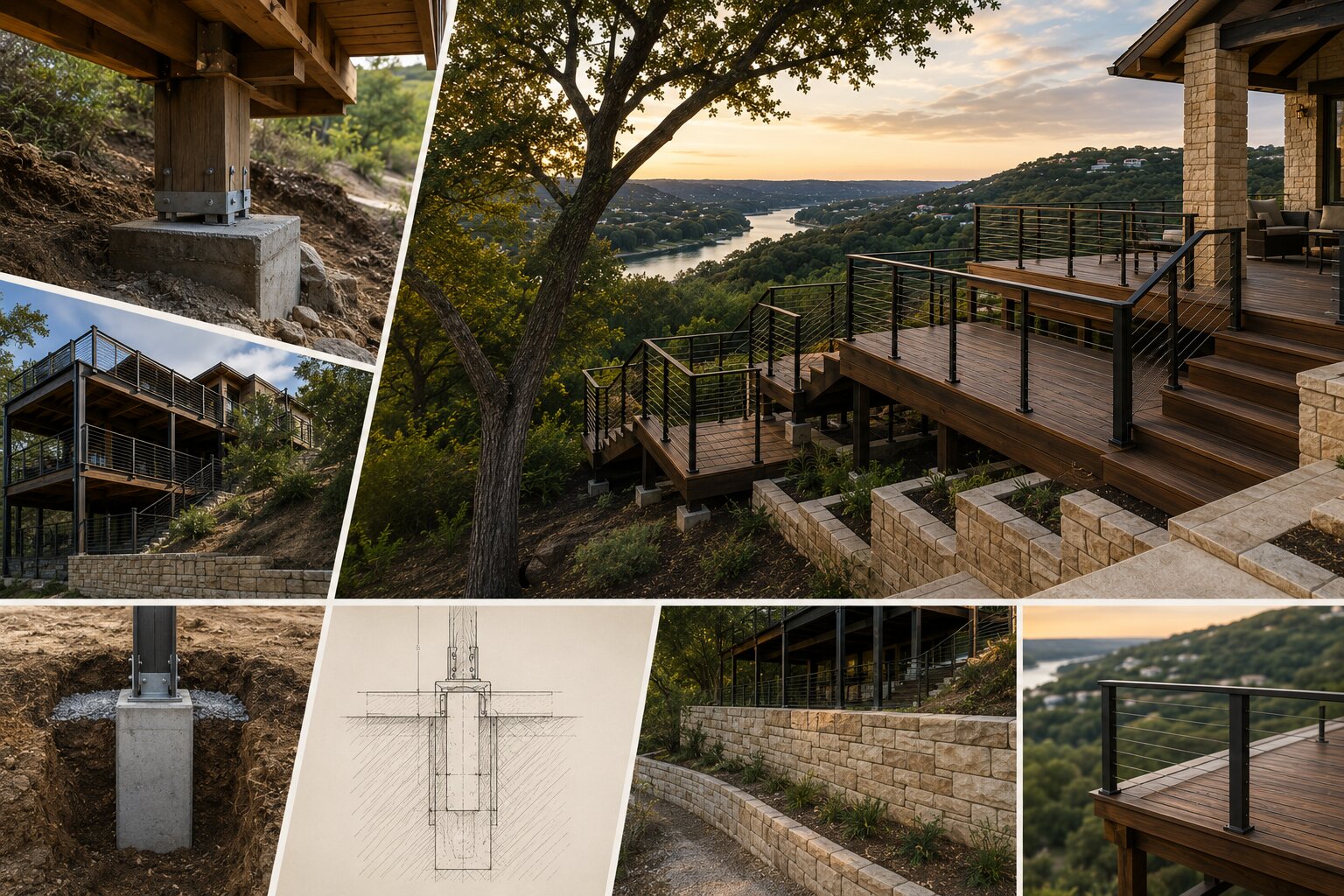
If you are planning something more involved, like a pool deck or a structure on a sloped lot, material costs shift again. Slopes require longer posts, more concrete, and sometimes engineered footings, all of which add to the total in ways a flat-lot quote would not reflect.
Where a Customer Can Save Without Regretting It Later
Size is the most straightforward lever. A deck that is 200 square feet instead of 280 square feet is not just cheaper in materials. It is cheaper in labor, framing, fasteners, and finishing. Many homeowners overbuild the footprint and then realize they use a fraction of it. Being honest about how you actually use outdoor space often leads to a smarter, more affordable project.
Timing can also matter. Contractors are sometimes more flexible on scheduling during slower periods, which can translate to better availability and occasionally better pricing. That said, do not let scheduling pressure push you toward a crew that is not properly licensed and insured. The savings disappear fast when something goes wrong.
One area where cutting costs genuinely backfires is the substructure. The decking boards people walk on are visible and feel important, but the joists, beams, and posts underneath are what determine whether the structure is safe. Deck repair calls often trace back to a builder who used undersized framing or skipped proper beam spacing to save money. Spending on the bones of a deck is non-negotiable.
How to Read a Quote and Know What You Are Actually Comparing
Two quotes for the same project can differ by $8,000 and both be legitimate. The difference is usually in what is included. One contractor may have priced permit fees, debris removal, and a final inspection. Another may have left all of that out. Before comparing numbers, ask both contractors to itemize labor, materials, permits, and any site-specific costs separately. That breakdown tells you far more than the bottom line.
Ask specifically about the framing lumber grade, the concrete mix for footings, and whether the quote includes all hardware or estimates it. Vague answers on those points are a signal worth paying attention to. A contractor who can explain exactly what they are building and why tends to be the one who builds it correctly.
For homeowners in Bouldin Creek, Austin, TX and the surrounding parts of Austin, TX, Top Notch Deck Builder has built a straightforward reputation for transparent pricing and honest assessments of what a project actually needs. If you have questions about a quote you have received or want to understand what a new build should cost, reach out directly. Top Notch Deck Builder, Austin, TX, (512) 215-3767.
Frequently Asked Questions
What factors influence the cost of deck building?
The main factors that influence the cost include labor, materials, and the specific site conditions. Labor is the largest expense, accounting for pre-construction tasks like pulling permits and planning for unique site challenges, especially in areas like Bouldin Creek, Austin, TX. Material choices can also significantly affect the total cost, with options like pressure-treated wood being more affordable upfront compared to higher-end composite materials.
How can I save money when building a deck?
One straightforward way to save is by reducing the size of the deck, as a smaller footprint lowers costs in materials, labor, and framing. Additionally, considering the timing of your project can lead to better pricing, as contractors may have more flexibility during slower periods. However, it’s crucial not to cut corners on the structural components of the deck, as that can lead to more expensive issues down the road.
What should I ask contractors when comparing quotes?
When comparing quotes, ask contractors to itemize labor, materials, permits, and any site-specific costs. This breakdown will help you understand what each quote includes, as one may cover additional fees like permit costs or debris removal while another does not. Pay attention to details like the grade of framing lumber and the type of concrete mix for footings, as this can significantly impact the quality of the build.
What are common mistakes homeowners make when building a deck?
A common mistake is skipping necessary permits to save money, which can lead to legal issues or complications during home sales. Homeowners also often overbuild their deck size without considering their actual usage, resulting in unnecessary costs. Lastly, cutting costs on the substructure can compromise safety, as the framing and support are crucial for long-term stability.
Get Directions to Top Notch Deck Builder
🎧 Listen to this as a podcast
Also on Apple Podcasts, Spotify, and Amazon Music.