The moment usually arrives without warning. You step onto your deck barefoot, feel a soft spot under your heel, and something shifts. Or a guest grabs a railing post and it moves. Sometimes it is less dramatic: you just look at the structure one afternoon and realize you have been ignoring it for two years and have no idea what shape the framing is in underneath. These are the situations that send homeowners looking for a deck building contractor, and the instinct is right. What happens next, though, is where most people go wrong.
What the Structure Is Actually Telling You
Soft spots in decking boards are almost never just about the boards. By the time surface wood feels spongy underfoot, moisture has typically been sitting against the joists below for months. Joists are the horizontal framing members running perpendicular to your decking boards, usually spaced 12 or 16 inches apart. When they rot, the deck loses its structural integrity from the inside out. Replacing only the surface boards at that point is like painting over rust.
Wobbly railings are a separate failure mode entirely. A railing post that rocks is often a sign that the ledger board connection or the rim joist it attaches to has deteriorated. Top Notch Deck Builder sees this constantly on older pressure-treated decks in Austin, TX: the top rail looks fine, the balusters look fine, but the post base has been sitting in pooled water for years and the wood fiber is gone. That is a fall hazard, not a cosmetic issue.
Separation between the ledger board and the house is the most serious sign of all. The ledger is bolted directly to your home’s band joist, and if that connection is pulling away, the entire deck can detach from the structure. This is not a repair you schedule when it is convenient. Get someone out immediately.
The Decision Between Fixing and Starting Over
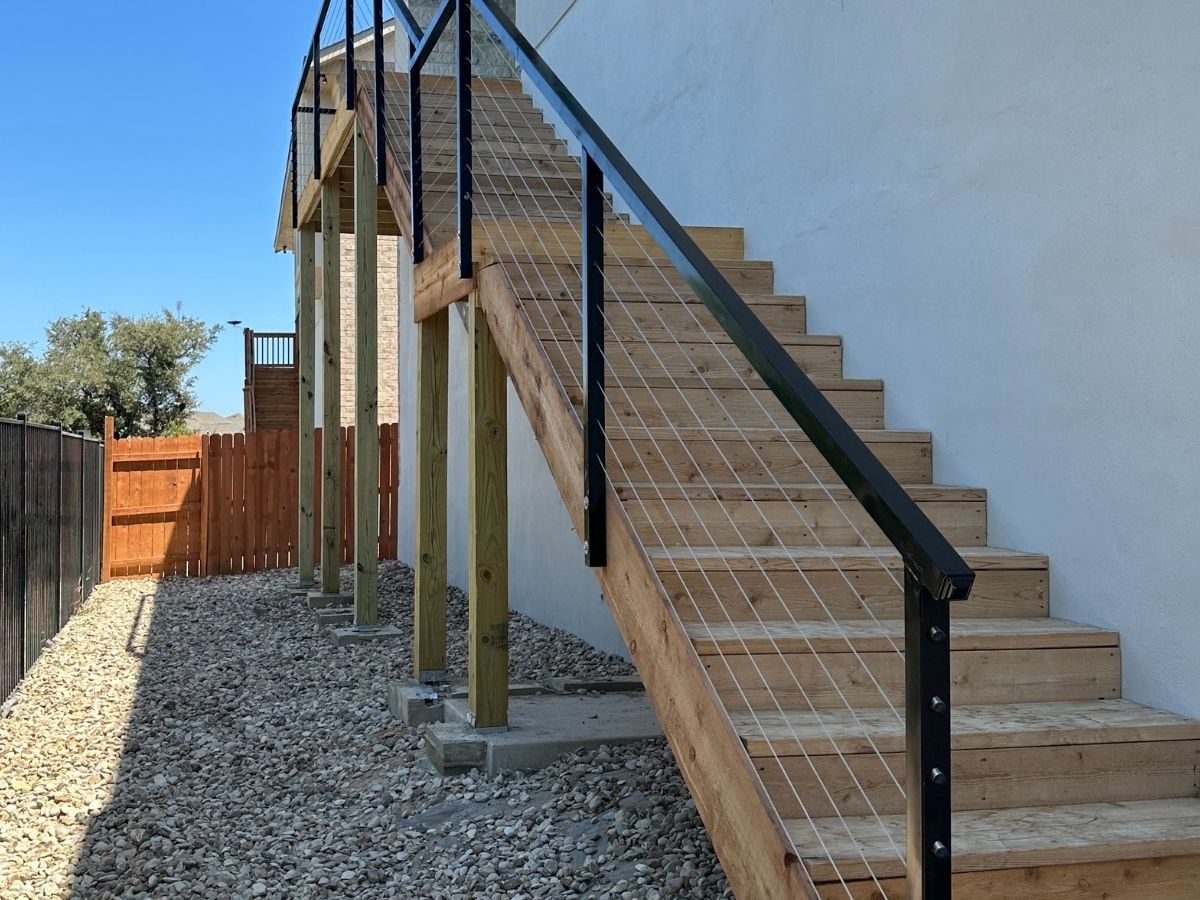
This is where homeowners lose the most money by guessing. A partial fix on a deck with compromised framing buys maybe two or three years before the next failure. A full replacement on a deck that only needed joist sistering and new decking boards is money thrown away. The only way to know which situation you are in is a proper inspection, and that means pulling up boards.
Top Notch Deck Builder’s standard advice to clients is this: if more than 30 percent of the framing shows rot or significant pest damage, replacement is almost always the more economical path over a five-year horizon. If the posts, beams, and ledger are sound, targeted fixes to joists and surface boards make complete sense. The inspection itself should take 30 to 60 minutes and involve a probe tool, not just a visual once-over.
Material choice matters here too. If you are replacing a wood deck that has failed twice in 15 years, that is a signal to consider composite decking for the rebuild. Composite boards do not rot, do not splinter, and hold up well in the heat and humidity cycles common across Austin. The upfront cost is higher. The long-term cost is lower. That math is worth running before you commit.
What to Do Before You Call Anyone
Document everything first. Walk the deck and take photos of every soft spot, every railing post, every area where the decking board ends meet the house. Note whether the ledger has flashing over it (a metal strip that directs water away from the house). Check whether the posts sit directly on concrete or are elevated on post bases. These details shape the scope of work and the estimate, and having them in front of you makes the first contractor conversation far more productive.
Pull your permit history if you can. In Austin, TX, unpermitted deck additions complicate resale and can affect what a contractor is allowed to do with the structure. Riverside and other neighborhoods with active code enforcement have seen homeowners caught mid-project because the original deck was never permitted. Knowing your permit status before the first call saves everyone time.
Get at least two assessments, not just two bids. An assessment tells you what is wrong and why. A bid tells you what someone will charge to fix it. You need the first before the second is meaningful. A contractor who gives you a price without looking at the framing is guessing, and you are the one who pays when the guess is wrong.
If the deck sits on a slope or a challenging grade, the structural conversation gets more involved. Deck foundation engineering becomes relevant when footings need to go deep or when the load path is not straightforward. This is not rare in Austin’s hill country terrain, and it is worth asking about upfront rather than discovering it mid-project.
Matching the Contractor to the Actual Scope
Not every contractor who builds decks is equipped to assess and repair structural framing. Ask directly whether they do framing inspections and whether they pull permits for repair work. Ask for examples of projects where they found problems the homeowner did not know about. The answer tells you a lot about how they operate.
Licensing and insurance are non-negotiable. In Texas, a general contractor working on a residential structure should carry general liability and workers’ compensation. Ask for certificates, not just verbal confirmation. A contractor who hesitates at that request is a contractor to avoid.
Top Notch Deck Builder operates as a licensed deck building contractor serving Austin, TX and the surrounding area, including clients from Riverside to the suburbs. For questions about your deck’s condition or to get an honest assessment of what the structure actually needs, reach out at Austin, TX, (512) 215-3767.
Frequently Asked Questions
What should I document before calling a contractor?
Walk your deck and take photos of every soft spot, railing post, and areas where decking boards meet the house. Also, note whether the ledger has flashing and whether posts sit on concrete or are elevated on post bases, as these details shape the scope of work and the estimate.
How do I know if I need a complete replacement or just repairs?
If more than 30 percent of the framing shows rot or significant pest damage, replacement is usually the more economical choice over the next five years. A complete inspection is necessary to determine the extent of the damage and whether targeted fixes make sense.
What kind of assessments should I get from contractors?
Get at least two assessments, not just bids. An assessment tells you what is wrong and why, while a bid only provides a price to fix it, making the first step crucial for an accurate understanding of the situation.
What should I ask a contractor before hiring them?
Ask if they conduct framing inspections and pull permits for repair work. Also, request examples of past projects where they identified problems that the homeowner wasn’t aware of, as this reveals their thoroughness and expertise.
Get Directions to Top Notch Deck Builder
🎧 Listen to this as a podcast
Also on Apple Podcasts, Spotify, and Amazon Music.